What is D&D like?
Wednesday, June 18, 2008 at 08:40PM So, you've roamed around the site, read the FAQ, and you're still not quite sure how the game is played or what the appeal is. That's okay; there's no other hobby quite like it, and an explanation is in order. This article will describe what happens before, during, and after the average game session in plain language, according to U20. Buckle up. :)
Planning for a session usually starts days, weeks, or even months before a session will take place. Since different DMs have different DMing styles, and different players prefer different types of games, the amount of preparation a DM and his players need to take varies wildly. It's a safe bet, though, that for a 'standard' five-hour session, the DM will have spent five hours elsewhere designing monsters, encounters, treasures, areas, or characters. Since I run a 'home brew' campaign, where all the encounter design, characters, and many of the monsters are made entirely from scratch, it takes me longer.
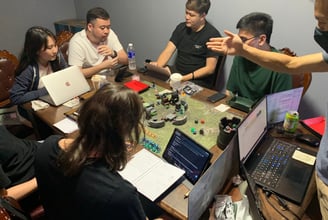
You need a good playing surface for D&D, and usually, bigger is better. Since everyone has books, miniatures, character sheets, dice, and snacks that they've brought to the table, it never hurts to have a lot of extra space. The session begins after all the players arrive, catch up with each other, and sit down.
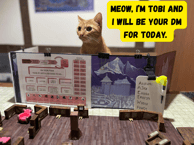
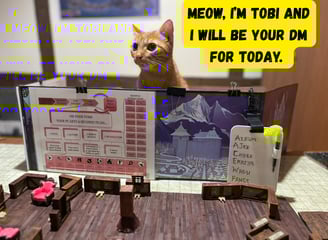
If you were sitting at the game table with me (RPG Ike) at my Shroud Isle campaign, you could look around and see four or five other people there with you. The table would be covered with a 'battle-mat,' which is a grid-covered erasable surface that can be rolled up. I would have a stool or extra chair beside me with the rulebooks close at hand, my "dice-corral' in front of me (one of those old wooden salad bowls from the 70s), and, rarely, a DM screen in front of me that serves to hide my rolls or selected miniatures from the other players so as to give nothing away.
Eventually, I would kick off the session by recapping what happened last session, just to remind everyone at the table about the adventure they're on, and any important developments. I'd go on to describe exactly where the PCs are now--something like "you've just cut down the last of the royal hive guards, but you hear other giant bees scrabbling through the hive towards your location. Baldred is badly injured, but otherwise you're all okay. You still haven't located the missing villagers, but from somewhere above you hear pained moaning in familiar voices. What do you do?"
Then I guide the scene. Perhaps someone moves to heal the injured dwarf, Baldred, who was poisoned by the royal guards at the end of the previous session. They might use a magic healing spell that would succeed automatically at curing some hit points or slow the poison's effects--in this case the player simply states that he casts Cure Light Wounds or Slow Poison on Baldred. Maybe the best they can do is rip up a cloak and use the strips to bind his wounds (so I'd call for an improvised heal skill check).
The PCs would then move on with their quest, moving deeper into the hive and probably encountering more enemies. If the quest was time-sensitive, like in this situation with the villagers captured by giant insects, I would probably try to underscore that fact by having the PCs hear a scream from within, or maybe signs and sounds of struggling as the captives fight back. Or, one of the PCs who knows something about nature could roll a knowledge skill check and ask me if they think it's likely that the captured villagers are simply going to be eaten, or if they'll survive for a time without the intervention of the PC heroes. As the DM I could simply make a judgment based on the campaign, based on what I know about insect ecology, or based on what I read in the Monster Manual about giant bees.
Regardless of the information I present to the players, though, it's up to them to decide what their characters do. They might decide that they need to rest before pressing on, in which case they would probably either leave the agitated hive, or find an easily-defensible area inside where they can post a watch in shifts as they sleep. They might even shrug their shoulders and set fire to the base of the hive, hoping to simply burn the whole thing down with "acceptable" losses, although few true heroes would opt for such a route unless there were no other options.
As the session goes on, players eat, drink, make jokes, take breaks, take phone calls, and chat about other things. We look up rules, argue about their interpretation, and curse or cheer at each other for stupid or heroic actions. Maps are drawn, erased, and drawn again as we move from room to room. Conversations are had with characters of all sorts, and those iconic D20s are rolled, again and again, as swords and axes fall, arrows and crossbow bolts and sometimes bullets fly, and the PCs dive away from exploding fireballs and over pit traps filled with spikes.
As the PCs succeed I reward them with experience points, treasure, and the built-up relationships with the other characters in the game world. In the previous example with the giant hive, the villagers would be rather grateful for being saved, and the PCs might find their drinks and food bought for them whenever they visit that village and those that neighbor it. Smiths might sell them cheaper weapons, or teamsters might offer to carry their goods for them on their next journey. Their renown grows along with their accomplishments, which may attract the eyes of other groups of adventurers, the ruling classes, angry intelligent monsters looking for revenge, or even the Gods. The DM adjudicates all of this, and a good DM ensures that the actions taken by the players have consequences, good and bad.
At its core, D&D is a social experience, and I'd be lying if I said that the people playing didn't treat it much like sitting down for poker night or to watch a hockey game. It can be as clean as you want it to be, but as a young man playing with other men, our games are often rude, crude, lewd, and noisy, but always fun. As the session continues the DM or players will look for a good point to close things down. Some DMs like to end on cliffhangers, and others like to end as the PCs are settling down for a peaceful rest. When a suitable point is agreed upon, the players gather their stuff, chat about the session, plan for a time for the next (for us it's usually 2-3 weeks from then), and say goodbye.
Between sessions the DM and players might trade emails. These could contain feedback about the game, information about the characters, or questions about game features that the players or DM want to modify to suit their game better. The DM starts planning the next session, if he hasn't already, and then we're back to the beginning, except the players are a little more powerful and the story has moved a few pages forward.
Hopefully that answers some of the questions you may have had about the structure of the game and the roles of the players and DM. I also hope it alleviates any of the concerns you may have had about the game-related social issues. (If not, please try the U20 FAQ, and if that doesn't have answers to your questions, drop us a line. We'd be happy to discuss the game with you.)
Give it a try, and have fun out there.


Reader Comments